
Deck & Porch Projects in 2024 – Your Complete Cost, Design, and Hiring Guide (Plus the AI‑Powered Solution That Ends Phone Tag)
If you’ve ever stared at a backyard and imagined a perfect deck or a year‑round porch, you’re not alone. A new deck can boost your home’s resale value by up…
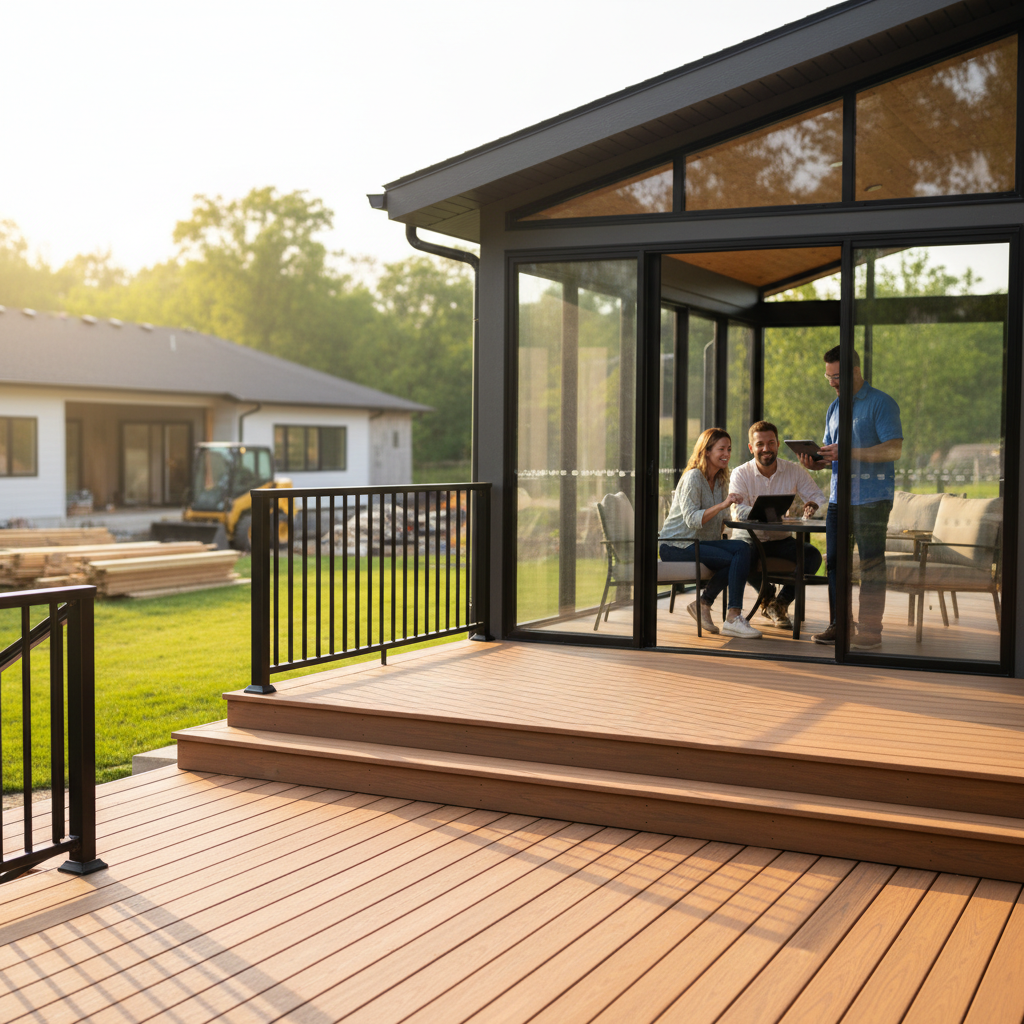
If you’ve ever stared at a backyard and imagined a perfect deck or a year‑round porch, you’re not alone. A new deck can boost your home’s resale value by up to 65 % — but getting there often means wading through vague estimates, endless phone calls, and risky payments. This guide walks you through everything you need to know to plan, price, and hire for a deck or porch project in 2024‑2025, and shows why the old lead‑gen model is finally obsolete.
What Homeowners Need To Know About Decks & Porches
-
Why the market is exploding – The U.S. decks market was valued at $8.3 B in 2024 and is projected to hit $10.9 B by 2034 (CAGR ≈ 2.8 %) 【Grand View Research】. Pandemic‑driven backyard remodeling turned outdoor living from a luxury into a necessity, and the trend shows no sign of slowing.
-
Materials matter more than ever – Homeowners are demanding low‑maintenance, eco‑friendly options. 68 % say “low‑maintenance” tops the list of material criteria (IDC Decking 2023). Composite decking’s global CAGR of 6‑45 % reflects that shift, while pressure‑treated wood prices have risen 12 % YoY (Coherent Market Insights).
-
Permits aren’t optional – In New York City, Boston, and most of the Northeast, decks must meet specific load, railing‑height, and fire‑rating codes. Skipping the permit can halt a project mid‑construction and expose you to fines.
-
Value‑add is real – A well‑executed deck recoups 50‑65 % of its cost at resale (HomeAdvisor). That makes the investment not just a lifestyle upgrade but a smart equity move.
Pro‑Tip: Start by checking your municipality’s building‑department website (e.g., NYC Department of Buildings) to understand required setbacks, railing heights, and fire‑rating rules before you even sketch a design.
Cost / Risk / Hiring Reality
| Item | Typical Range (USD) | What Drives the Cost | Common Risk |
|---|---|---|---|
| Basic pressure‑treated wood deck (≈ 200 sq ft) | $1,500 – $4,000 | Lumber, labor, basic railing | Wood rot & warping in 5‑7 years |
| Mid‑range composite deck (≈ 200 sq ft) | $4,500 – $9,000 | Higher‑grade composite, labor, hidden fasteners | Higher upfront spend, but 20‑year warranty |
| Custom hardwood or exotic timber deck | $12,000 – $30,000+ | Premium wood, custom railings, design fees | Cost overruns, supply delays |
| Porch remodel (adding roof, screens, or flooring) | $2,500 – $12,000 | Structural work, roofing, finishes | Permit complications, weather delays |
| Progressive billing milestone (30 %/40 %/30 %) | — | Allows cash‑flow control for homeowner | Requires escrow or hold‑back mechanism |
Scroll to see all columns →
The numbers above reflect projects in the Northeast corridor (Boston, NYC, Philadelphia). Prices can swing higher in high‑cost urban cores because of permit fees and labor premiums.
Key takeaways
- Budget planning should start with a range, not a single figure.
- Material choice is the biggest lever—composite reduces long‑term maintenance but costs more up‑front.
- Risk spikes when you rely on a single, unstructured quote that may omit hidden costs (e.g., demolition, permit fees).
How To Vet Providers Without Getting Burned
-
Check licensing & insurance – Verify a contractor’s state license, liability insurance, and workers‑comp coverage. Many states (e.g., NY, MA) offer searchable databases.
-
Read structured, line‑item quotes – A proper quote lists every scope item (site prep, framing, decking material, railing, finish) with unit prices. This makes it easy to compare apples‑to‑apples.
-
Look for escrow‑backed payment terms – Platforms that hold funds in escrow until work is inspected dramatically lower the chance of “no‑pay” disputes.
-
Assess past work – Request recent photos or a virtual tour of completed decks similar to your project.
-
Scrutinize reviews for consistency – Pay attention to repeated mentions of “phone tag,” “last‑minute price changes,” or “unfinished work.”
Pro‑Tip: A contractor who can produce a booking packet (structured quote) within 48 hours is likely leveraging modern workflow tools rather than manual spreadsheets.
Where The Old Workflow Breaks
| Pain Point | Typical Experience | Why It Happens |
|---|---|---|
| Phone tag & dead leads | Homeowner calls multiple contractors, leaves voicemails, waits weeks for a callback. | Lead‑gen sites sell homeowner inquiries as “leads” that many contractors ignore, leading to high dead‑lead rates. |
| Vague estimates | Quote: “$5,000‑$7,000 for a deck” with no breakdown. | Keyword‑based directories focus on matching names, not on clarifying scope. |
| Scope drift & surprise bills | Mid‑project, contractor adds “extra demolition” cost. | Lack of a structured, line‑item packet means changes aren’t documented up front. |
| Risky payment flow | Pay cash up‑front, then discover shoddy workmanship. | Traditional models rely on cash‑on‑completion, exposing both parties to fraud. |
| Fragmented tools | Homeowner uses email, a spreadsheet, and a separate invoicing app. | No single platform integrates intake, quoting, messaging, and billing. |
Scroll to see all columns →
These breakdowns are why homeowners spend 4‑6 weeks juggling calls before receiving a single, usable quote (industry anecdote). The pain points also fuel the “pay‑per‑lead” frustration that dominates platforms like Angi, Thumbtack, and HomeAdvisor.
How PLMBR Changes This Workflow
1. Conversational AI Intake
You describe your dream deck in plain English, attach a photo, and the AI instantly identifies trade, location, and urgency. No more manual form fields.
2. Semantic Search & Matching
Instead of keyword matches, PLMBR’s vector‑embedding engine surfaces the best‑fit, vetted providers within your city (e.g., Boston, NYC, Philadelphia). Providers with the right licensing, insurance, and calendar availability rise to the top.
3. Booking Packets – Structured, Line‑Item Quotes
Each provider receives a booking packet builder that auto‑generates a detailed quote:
- Site preparation
- Material type & quantity (e.g., 200 sq ft composite)
- Labor hours
- Permit fees
- Milestone‑based billing schedule
You can compare packets side‑by‑side on PLMBR’s platform, seeing exactly where prices differ.
4. AI Agent Outreach (Premium)
A personal AI agent contacts multiple providers simultaneously, tracks each response, and surfaces only the actionable items (e.g., “Provider X asks for clarification on railing height”). You never chase a single contractor again.
5. Escrow‑Backed Payments & Progressive Billing
Funds are authorized via Stripe and held in escrow until the agreed milestone is marked complete. For a $12,000 composite deck, you might pay 30 % up‑front, 40 % after framing, and the final 30 % after finish inspection—protecting both parties.
6. In‑Context Messaging & Dispute Resolution
All communication, packet revisions, billing requests, and even dispute evidence live in a single chat thread. If a problem arises, the AI‑mediated dispute system suggests resolutions and can automatically release escrow based on documented evidence.
Bottom Line: PLMBR replaces the three biggest homeowner frustrations—phone tag, vague quotes, and risky payments—with an AI‑native, end‑to‑end workflow that makes hiring a deck or porch contractor as simple as ordering a pizza.
Explore the platform:
Questions To Ask Before Hiring
- Are you licensed and insured for work in [your city]?
- Can you provide a detailed booking packet with line‑item pricing?
- What is your payment schedule, and do you support escrow or progressive billing?
- Do you handle permitting, and what are the associated fees?
- How do you manage weather delays or unexpected site conditions?
- Can you share recent project photos that match my design style?
Having clear answers to these questions will let you compare providers objectively and avoid surprise costs later.
Design Trends & Materials for 2024‑2025
- Hybrid decks – Combine a wood base with a composite overlay for cost savings and a premium look.
- Integrated lighting – LED strip lighting built into railings creates ambience and safety.
- Year‑round porches – Adding insulated, retractable roofs and screened walls lets you enjoy the space even in New England’s chilly months.
- Sustainable sourcing – Look for FSC‑certified wood or recycled‑plastic composites to meet eco‑friendly goals.
Pro‑Tip: Use PLMBR’s AI material advisor (available in the seeker flow) to get a side‑by‑side cost/performance comparison of pressure‑treated wood, composite, and exotic hardwood for your specific climate.
Conclusion
Building or remodeling a deck or porch is one of the smartest upgrades you can make—boosting both livability and resale value. Yet the traditional lead‑gen model still forces homeowners into a maze of phone tag, vague estimates, and risky cash‑on‑completion payments.
PLMBR’s AI‑native workflow eliminates those pain points by turning a simple photo and description into structured, escrow‑backed quotes from vetted contractors—delivered in minutes, not weeks. With transparent pricing, in‑context messaging, and progressive billing, you gain the confidence to invest in outdoor living without the usual headaches.
Ready to turn your backyard vision into reality? Describe your project in 60 seconds on PLMBR and start receiving line‑item, escrow‑backed quotes from top‑rated builders—no phone tag, no lead fees.
Explore more home‑service guides at our blog.
References
- Grand View Research – Decks Market Size, Share & Trends (2024) – https://www.grandviewresearch.com/industry-analysis/decks-market-report
- IDC Decking – 5 Deck Industry Trends (2023) – https://www.idcdecking.com/5-deck-industry-trends
- Coherent Market Insights – Wooden Decking Market (2026) – https://www.coherentmarketinsights.com/market-insight/wooden-decking-market-5296
- HomeAdvisor – Deck or Porch Repair Value – https://www.homeadvisor.com/tloc/Litchfield-Park-AZ/Deck-or-Porch-Repair/
External resources